Townie on a NZ smallholding

Townie on a NZ smallholding

Friday, 20 January 2017

January 2017


Mother Nature unleashed an un-seasonal storm a couple of nights ago, described by the media as a ‘weather bomb’.  The West Coast copped torrential rain, and we got the gale force winds.  It was probably the worst storm we’ve had since moving out here.  No chance of sleep at all, with numerous things going bump in the night.  The tree damage at first seemed considerable, but after some clearing up, re-staking and finger crossing, we’ve only lost one tree so far – the black thorn (maker of sloes).  I’d recently been regretting planting it in the centre of a keyhole bed in the vege garden as it had been getting too big and too thorny, so all up the storm wasn’t a disaster.  I took several cuttings that can be planted elsewhere if they take.  The fig tree also lost a huge limb and is now seriously unbalanced.  Hopefully the stakes will support it until it re-balances itself.  The corn is munted but not destroyed, and some of the olive trees were bent over; only time will tell if their damage was terminal.  Considerable quantities of unripe fruit (mostly apples, pears and stone fruit) were blown off, which was gutting but could have been worse. 


Many happy hours in the vege garden have finally created some kind of order.  There are always jobs to do, but happily it feels like I’m on top of them enough to maybe have a day off.  Cropping is starting in earnest – lettuces, cucumbers, snow peas, kale, baby beets, beans and cabbage so far, but plenty more on the way.  The low hedges have been trimmed and most of the beds are fully planted.


The tea gardens have also finally been planted – so far peppermint, spearmint, liquorice, chamomile, bergamot, lemon balm and anise hyssop, plus the ginger in Madame Cholet.  The liquorice is struggling a bit, but everything else is taking off.  The raised beds are being watered religiously every day, and I’ve even surpassed myself by erecting some wind cloth, just in time before the storm struck.  Optimistically there’ll be herbal teas a-plenty in a couple of months. 


There's been a noticeably bigger rabbit population and not surprisingly, some rabbit damage in the vege garden.  Rabbit holes have popped up all over the property.  Shortly after the disappearance of some of her brassicas, a huge hole appeared in Karyn's patch on the day of a pizza evening. There were several suggestions about how best to dispose of them, but I wasn't sure about that.  Live and let live and all that.  Instead I privately had a word with the bunnies and cut a deal - they can have any plant in Karyn's bed but nowhere else.  Let's see how that plays out.  

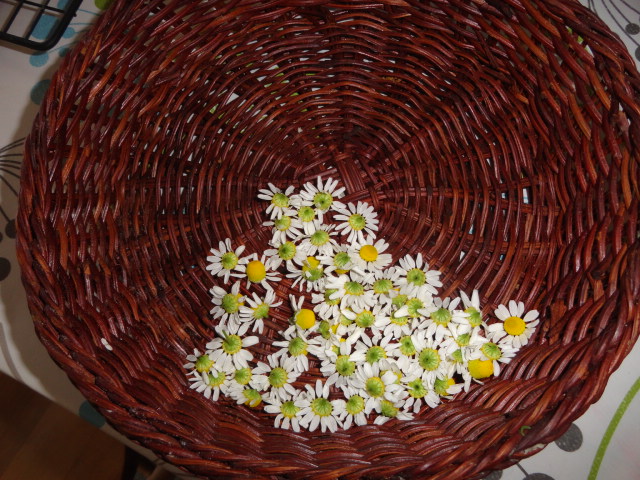
One spare chamomile plant ended up in Madame Cholet (in the interests of greenhouse biodiversity) and is flowering away.  The vast quantity of flowers were picked and dehydrated using my new solar dehydrator (a Sunflair solar oven).  Very exciting!  Also dehydrated have been a batch of jerky and some culinary herbs – the quintessential parsley, sage, rosemary and thyme.  Next to try dehydrating is fruit.  The solar oven cooks too.  So far I’ve only tried it out with a whole chicken.  It was promising but had to be finished off in the kitchen oven after it clouded over.  

Despite the storm, the orchard crop is looking promising.  There will be apples and pears and heaps of stone fruit, particularly plums.  Even the Flatto nectarine is fruiting – I’d written that tree off as a weakling new variety and had vowed not to plant anything other than robust heritage trees, but maybe it’ll prove me wrong.  The cider apples number 4 in total – not a good start to cider making, but at least I can use the Bramley apples instead.  I plan to try my hand at making cider vinegar once there are spare ripe apples.   There are nuts – almonds and sweet chestnuts – but probably not more than a handful in total.  One of the walnut trees that had looked dead has sprung into life.  The new growth may be below the graft, so probably we’ll end up with another quince, assuming that’s the root-stock.


On the animal front, it’s looking possible that both Hera and Athena are pregnant.  They were inseminated and now have each had 2 cycles with very limited signs of heat.  We’ve read that this is what’s supposed to happen, so here’s hoping!  A couple of gorgeous calves in winter would be a great tonic.  The sheep are just the same, and the pigs are porkier.  They’ve been really enjoying the extra fruit that the storm brought down.  They were already getting the falling plums from the overhanging tree in the pig run.  


2017 brings with it new life opportunities for us all.  Lucas's new job is going well, Sam's progress into the army is moving forward, and Billy's getting on with kitchen work and seeking a formal apprenticeship.  Peter has a new job in a brand new bottling company with old colleagues, and I'll be working for the Health Board as an educator for a couple of days a week as well as the Polytechnic work. Hope that won't get in the way of enjoying life and abundance on the land.


Wednesday, 28 December 2016

December 2016


Just about managed to squeeze in December’s blog before the end of December.  My excuse for this tardiness is that I’ve spent much of the month away from home.  I was asked to do 9 days of emergency midwifery cover in Westport at very short notice at the start of the month, and also holidayed in Kaiteriteri with Kaja and kids in the week before Christmas.
Westport was its usual lovely place.  Being on call restricted me to local walks only, but happily there are plenty of those including the gorgeous Carter’s Beach.  Beautiful and full of happy memories.  The stint in Westport came at a crucial time of year in the garden.  Peter was left with a list of instructions, and I took with me the seeds I’d just planted, and a whole bunch that were germinating in a damp tea towel in the kitchen.  I packed some potting compost and suitable containers and off I went.


I finally got round to getting myself another bee suit, so that Peter can help with some of the beekeeping, especially the heavier lifting.  The first batch of this year’s honey is due by the end of the month (to avoid the tutin risks) so I’ll be putting the suit to good use fairly soon.  Full honey boxes can weigh up to 40kg, so a bit of extra muscle won’t go amiss.  We’re nearly out of last year’s honey so the timing couldn’t be better.


On the bee front, one of my best Christmas presents was a beehive mailbox, crafted by Peter.  It’s much bigger than our old one so should be more practical.  Our postie Mike is happy with it too.  


Also on the top ten of Christmas presents was this sh*t jumper from Kaja.  Who manufactures these things??


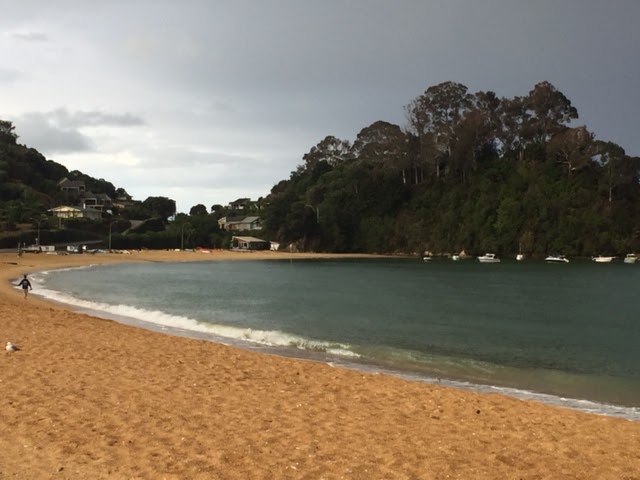
We stayed in an old bach in Kaiteriteri, famous for being the only bach that’s actually on the beach. It's in the distance in the centre of the photo. Kaiteriteri is quite a visitor mecca, and it’s easy to see why.  A breathtakingly beautiful bay, safe swimming in azure sea and golden sands.  We had a day trip to Marahau and took a walk up the Abel Tasman track to the first beach (Porter’s). 


The lifestyle block’s definitely taken a bit of a back seat recently.  Everything seems to be thriving on a bit of neglect, though obviously that includes the weeds.  They’re not such a priority now that the plants are establishing, and will help keep the soil moist over the coming summer months.  The hayman came and cut 91 bales out of the two back paddocks.  Hopefully that’ll be enough to carry through our 5 cattle over winter. 
The animals are all just getting on with their lives.  The cows have been relatively well-behaved for a while, the sheep are just being sheepish, and the pigs are visibly growing.  We’re hoping to move them to the new pig run in the horse arena, but will probably need to put aside a whole weekend for the move.  Karyn has kindly offered to video the process.


It's been lovely to spend time with our grown up sons over the holidays.  Their plans mean that opportunities to be together as a family will become less frequent.  They have their own life plans and it's good to watch them get on with their lives.  The photo shows them with cousins Michael and Melissa in the Onamalutu Reserve.    
Looking forward to 2017 being another great year on the land.

Saturday, 26 November 2016

November 2016


There’s been lots going on at home in the last few weeks.  On October 30th there was a dusting of snow on Mount Riley (1314m), but since then summer’s been trying to get her feet under the door.  More than adequate rain but plenty of sun too, and no shortage of the usual spring nor-westers.  It was 30 degrees yesterday, and the combination of sun and rain means everything’s growing.  Hay making won’t be far off – it’ll be good to get that done well before Christmas for a change.


On November 14th, the people of Kaikoura and surrounds experienced a massive 7.8 magnitude earthquake.   Kaikoura was dealt massive damage, and has been pretty much cut off.  We’re a little over 100kms away and it was bad enough here.  Pictures and ornaments were thrown around, but thankfully for us, nothing worse.  The computer survived to tell the tale.  Some of the wineries have had significant losses (all that wine…) as have other Blenheim businesses.  Wellington also bore a hefty brunt and there are many buildings will need strengthening or bulldozing.  Several aftershocks have been pretty huge quakes in their own right.  State Highway 1, that links Blenheim to Christchurch, has been so severely munted that it may never re-open.  That beautiful coastal road.  The only current road route to Christchurch is via the inland Lewis Pass and adds about 3 hours to the journey.  We’ve had to make alternative travel plans for our Christmas visitors (Kaja, Michael and Melissa) and for Lucas to get out of Christchurch for the festivities.

The earthquake was soon followed by extensive rain.  The resulting flooding temporarily closed State Highway 6 – the route between Blenheim and Nelson, adding to the chaos caused by the destroyed coast road.  The wetland had a good dousing and provided quite a playground for the cows.  On the whole it’s been good to have plenty of rain, especially after the recent droughts.

We were the happy recipients of two Jersey cross cows, re-located from Wairau Valley to here.  Karyn and Greg chose the smallest of the pair, in the hope that that’s a temporary size only.  In the absence of a Greek God of bicycles, he’s named after the God of transport – Hermes.  We finally settled on the name Heracles for his partner in crime.  They’ve quickly made themselves at home.  Heracles has already proved his worth by obviously responding when Athena and Hera were on heat.  Both heifers were finally artificially inseminated so hooves crossed that was successful.  As the smallest, Hermes is bottom of the pecking order, but he’s working out that if he spends time with Dionysus, then mischief can prevail.  Dionysus found his way into the vege garden one day, trying (we think) to get closer to Hermes who had been separated from the others at the time.  He was chased out through the gate, then turned round and hopped straight back in over the fence like he’d been doing it all his life.  He’d better not be teaching the others that particular trick. He has also shown both Hermes and Heracles how to break into the chook run.  No idea why either, but apparently bird netting is delicious.

The same weekend that the cows arrived, we also collected pigs.  Karyn and I drove out to Nuggety Creek in the Wakamarina Valley to collect 4 gorgeous Wessex Saddlebacks.  They came from a free range farm where the pigs roam anywhere and everywhere.  They were about 10 weeks old when we picked them up, and bigger and sturdier than any pigs we’d raised before.  It took a while to work out we had 3 boys and 1 girl.  In keeping with our other ‘classic’ name choices, they’ve been named Nemo, Bruce, Crush and Darla.  Darla is the smallest but the feistiest.  Like all pigs they love weeds and have shocking table manners.  They’re great entertainment value.

We reviewed our previous methods of sprouting grains, and instead of using hand sewn muslin bags we are now using buckets that have small drilled holes in the bottom.  When we rinse (twice a day) the water just slowly leaks out of the bottom.  The grains themselves (actually only peas so far) are kept moist with a damp piece of towel and protected by wooden boards.  It’s considerably easier than the bag system and they remain outside, not in the kitchen.   The sprouted peas are a good protein source and are very popular with the pigs.


On the maintenance front, we’ve had another load of lime spread, and we’ve re-painted the house with preservative.  Dull, boring tasks but necessary.  We last painted the house 5 years ago, not long after we moved in.  We have a longer ladder now, so it was a tad easier this time.  The lime has only been applied to half the property because a miscalculation meant that double the dose was applied.  In the big picture it wasn’t a bad mistake, because there’ve been many years without lime.  It just means that next year the other half of the property should also receive a double-dose. 

Since the chooks were confined to barracks, there was no longer an excuse no ignore the flower garden.  It was finally weeded, watered, rearranged and mulched with barley straw, and is now looking quite beautiful.  It’s filling out with self-seeded annuals, and the perennials have begun to flower.  The paeonies are more glorious than ever before; even the roses are looking (and smelling) quite lovely.


The orchard is very much looking like an orchard.  Some trees, like the plums, are fruiting away, whilst others are less abundant than last year.  The Broxwood Foxwelp cider tree looks healthy though isn’t laden, and the brand new Cidre Bisquet tree fruited its little heart out but they didn’t set.  It’s not looking good for cider this year.  Luckily there’s always next year.


The vege garden is gradually being cleared, and planted with a variety of seedlings nurtured by Madame Cholet.  Far too many lettuces and probably enough tomatoes to feed the country, but otherwise a good selection of veges are on their way.  The straw mulch has worked a treat to keep weeds down, but it gets shifted around a lot by the wind, sometimes overwhelming young seedlings.  Rampant wild rabbits have also caused some destruction.


The bees swarmed again, and also went to a new loving home.  Same hive, quite amazing that any workers are left, but they definitely are.  Each hive now has an extra honey box on top, so they shouldn’t be able to complain about limited space.  I’m hoping to take the first batch of honey off at the end of the year when there’s no risk of tutin. 
November 21st was Dad’s birthday.  Usually I choose some flowers from the garden and gift them to the sea off Karaka Point in the Marlborough Sounds, where we scattered some of his ashes.  That wasn’t possible this year, so instead they were thrown into the Onamalutu River, where they danced a while before being taken downstream. 

Lucas starts his new job at the end of the month.  Sam has been accepted by the NZ Army as a band musician, and Billy has taken up a chef apprenticeship.  He has yet to be eligible to sit his restricted driving licence, so we’re having to do the drop offs and pick-ups, but no more school bus runs.  Ever.  Not quite flown the nest, but definitely those boys are moving into new life phases.  I’m not feeling old at all…

Tuesday, 18 October 2016

October 2016


Several episodes of rain have contributed to the lush spring pasture growth.  It’s fantastic timing to give the orchard tree roots a good soaking, as most are smothered in blossom. After their severe prune at the end of last season (thanks Sue McNabb - excellent tip!), the cocktail kiwifruit is actually fruiting for the first time ever.  It was warned it had one last chance to be productive or face the chop permanently.  The currants are flowering away too, and the gooseberry bed has been weeded and tended, and my arms are recovering from that spiky ordeal.  The cider apple trees are budding up but are yet to blossom so I’m keeping my fingers crossed.  It’ll be tricky to retain my queen of cider status without that key ingredient. 


Peter put the new hand shears to the test, with Sam’s help, and now the two scruffiest sheep – Shaggy and Simba - are successfully shorn.  ‘Successful’ is really a matter of opinion as far as our shearing is concerned, but at least they’re ready to face the summer heat.  Still no sign of imminent lambs, which is very disappointing, though all hope is not yet lost.  I’m probably imagining a few rotund ewe bellies, but I hope not.


Numerous vege, flower and herb seeds are planted and some are already germinating.  Spending time in Madame Cholet tending them is an absolute pleasure.  Outside, garlic and potatoes are sown out too, and only a little weeding will be needed to clear the other keyhole beds.  Most of the winter veges are over and done with, and I’m leaving the brassicas to flower so that the bees have a little extra nourishment.  The asparagus are cropping for the first time - barely enough for a meal, but at least it can be called an asparagus patch now.  Spuds are planted in the bed shown in the photo below.  They'll be joined by beans once the risk of frost is past.  Apparently they are good companion plants for each other.

The wetland is filling rapidly with millions of crack willow shoots.  It’s depressing to think about how much work it would be to get rid of it all – well beyond what we could achieve on a weekend or two.  At least I’ve finally got round to planting out some black beech and Ti Kouka (cabbage) trees, in the vain hope that eventually the native plants will overcome the introduced willow.  The cabbage trees from earlier planting missions have been the most successful.  They’re considerably bigger than the foot-high sticks they started out as.  I’m looking forward to seeing them evolve into weird and wonderful shapes.  There are many flax too, and a handful of lancewood, totara and others.  Not a huge success when you think about how many plants went in, but not a total disaster either. 


The chooks have been moved back into the orchard house/run, where they’ll be contained for a few weeks.  This should allow time to get the flower and herb gardens mulched before it gets too hot.  Peter’s added a couple of features to their run – a chook swing (I know) and a covered area over a dust bath.  It feels mean to coop them up when they have lots of fun clucking about the place, but hopefully it’s only temporary, and at least they can practice trapeze acts.


Three little shoots of ginger from some roots that were planted in a pot indoors are popping up.  The plan is to transplant them into a half wine barrel in Madame Cholet.  I’d be amazed if one day we’ll actually be able to harvest ginger roots, but maybe it’s easier than I’m imagining.  So far so good anyway.  Also planted are some turmeric roots, but they have yet to declare themselves.   Seeds of liquorice, peppermint, spearmint, chamomile, anise hyssop, lemon balm and bergamot are also starting to germinate.  The ‘tea garden’ is emerging!


I’ve been getting out ‘n about on a few walks, and am especially enjoying the Onamalutu reserve.  The only downside is that dogs aren’t allowed, so Maggie misses out.  There’s a circuit that takes around half an hour to walk, and it includes the open field of the campground, a forested stretch among native bush and magnificent kahikateas, and of course, the meandering Onamalutu river.  Magic.  

On the cow insemination front, we’re still waiting to coordinate their heat with ours and the

vets’ availability.  Our availability that is, not our heat.  Karyn has been looking for a steer to fatten up and convert into sausages as a fund-raiser for Greg’s cycling events.  She eventually appointed Peter as her stock agent, and he’s managed to find not one, but 2 steers, at a reasonable price.  They should be here in a few days, so photos in the next blog.  We’re going to keep the other in the absence of our own calves.  Also we have excess pasture right now, and still have lots of hay left over from the relatively mild winter, so could easily feed another couple of mouths.  Discussions are ongoing about names, as we’re insisting on Greek Gods.  Karyn may or may not hang onto ‘Gravel Rash’ as a nick-name for hers.
  
We’re also ready for more pigs at last.  The new run isn’t ready yet, but the old one has been prepared.  There’s hay in the shed (including in the rafters for insulation), clean water in the half barrel, and the potato crop is protected with solar electric fencing.  Peter has re-constructed the feed trough to be much weightier, and has built a platform for the old concrete horse trough so that it drains better.  It’s time to just add pigs.  Eventually the plan is to transfer them to the new run once we’ve had enough time to pig-proof it and sort out some shelters.

The bees received their miticide strips (for varroa) in mid-September.  A subsequent hive check showed healthy and very numerous bees in both hives, with hive 1 bursting at the seams.  I only had one spare honey box with frames, so that went onto hive 1.  Then the noise and activity of hive 2 started to rise, so I went back in and swapped the brood boxes around in the hope that would provide more space.  There were some empty queen cells and I assumed the hive must have already swarmed.  But that same afternoon (16th October) they really did swarm – no wonder they were getting noisy.  It was a good volume of bees that settled onto the base of a post and on the grassy ground where it was nigh on impossible to capture them.  When they were still there hours later (and despite the provision of a rather attractive cardboard box hive right next to them), I brushed as many as possible into a box, in the hope that included the queen.  The swarm was then gifted to some ‘newbee’ beekeepers who were delighted to be able to kick-start beekeeping in earnest.

The ground was prepared and grass seeds were scattered in the area above the septic tank that was cleared last year.  Then the chooks scoffed the lot, so it’ll have to be re-sown now that they’re contained.  Also sown in the paddocks are a range of pasture seeds, including red clover, buck wheat and herbal lee seeds for grazing animals.  When I say ‘sown’ I mean sprinkled by hand after being mixed in a bucket of sand.  Not an exact science, but hopefully some will thrive and ultimately set more seed of its own. 
  
The mercury has hit 25 degrees, but the blustery nor-westers that remind you it’s still spring.  The sand-flies are taking over the world again, limiting the pleasure of working outside.  There are still several thousand jobs to be done, but for the first time, I haven’t committed myself to big new spring projects and I don’t feel overwhelmed.  The vege garden is complete, and if I’m honest, is probably too big, especially now that the boys are flying the nest.  It’s a luxury of a problem that I won’t dwell on.  I’ll just get on with planting it all up.  The gravel paths and thickly straw-mulched beds are already reducing the workload for this time of year.  The photo shows Karyn (well, Karyn's fine bottom) weeding her little slice of paradise.  She'd been gloating about her parsnip growing success.  To me, being smug about root vegetable success is not an attractive trait, so a shot of her backside is totally justified, if not strictly necessary.


All the boys are working on their life-plans.  Lucas is spreading his wings and actively seeking new work challenges.  Sam’s still waiting to hear if he’s employable as a musician, and Billy’s keen to leave school and take up a chef apprenticeship next year.  Watch this space…