Townie on a NZ smallholding

Townie on a NZ smallholding

Thursday, 23 March 2017

March 2017


The days are drawing in, and winter's beginning to feel like it's snapping at our heels.  I’m desperately trying to squeeze in as many solar-dehydrating hours as possible before Autumn rolls over.  The fruit is the main priority – mostly apples, peachcots and peaches – being joined by whatever herbs that can be accommodated depending on the weather forecast.  Still in use is the Sunflair, as this can reach higher temperatures than ‘Solly’.  Generally the fruit starts off in the Sunflair before being transferred into Solly to complete the dehydration.  I’ve also had a bash at drying rhubarb and celery, which shrink to tiny weeny pieces.  I’m looking forward to spending some time re-hydrating and seeing what everything reverts to.

I've ordered 3 Thompsons Seedless grape vines, that will arrive in a month or so, and have potted on 2 Camellia Sinensis (real tea) plants plus a Stevia.  They'll be protected over winter and then planted out in spring, once the decision is made about where they're going.  The grape variety is the most common grape used globally for drying into raisins, and I hope to be able to take cuttings to expand my stock. 
The 3rd batch of cider (unremembered name Russety + crab apples) is in a bucket on the kitchen bench, covered by an old tea towel that is tied on with some string.  Batches 1 (Bramley apples) and 2 (Hetlina + crab apples) are already bottled and should be left for as long as possible to brew.   I‘ll have to hide them from myself (haha).   I’ve been using Lynda Hallinan’s recipe, involving freezing apples, blitzing them, adding water, leaving to ferment in wild yeasts before straining, sweetening and then bottling.  The Bramley batch was creatively named ‘Scrumpy Jill’ by Peter.  Then we did a little research into the origins of Scrumpy and found that before it was called Scrumpy it was known as ‘Rough’.  According to the oracle Wikipedia, ‘Rough’ was known as the customary drink of farm labourers in the west of England, who would generally receive up to a quart daily as an incentive on top of their wages.  In honour of my familial connections with the West Country, future batches  of cider will henceforth be known as ‘Silke’s Rough’, at least until the double entendre wears too thin.  Here’s hoping that one of the batches enables me to defend my Cider Queen crown for 2017.
Ongoing ferments are the cider apple vinegar and sauerkraut.  They’re at least looking like I’d expected, so hopefully will not be disasters.  The quinces are ripening, so I’ve taken the liberty of purchasing a couple of bottles of vodka, only because that’s the best way to preserve them.  I’ve also learned from Lynda Hallinan (at her talk on preserving in Blenheim Mitre 10 – never let it be said that Blenheim is a backwater) what the heck to do with medlars.  Apparently they make great jelly, though you do have to wait until they rot (known as bletting) before using them.

The vege garden is beautifully productive, and happily I’m just about managing to keep on top of cropping.  There are a few has-beans and some gone-to-seed peas, but otherwise things are either being eaten or preserved somehow.  Carrots are on tap, as are kale and beetroot, and as usual, it’s a great pumpkin season.  Even Karyn begrudgingly conceded that my most massively stunning pumpkin is already impressive. 


The fruit is coming to an end, really now just the peaches are left to finish off the season.  There were several conference pears hidden amongst the high branches, despite the storm that wreaked havoc with unripe fruit.  Hopefully next year will be significantly better.  We’ve had a go with my new fruit picker grabby-baskety thing that was a Christmas present.  Peter ingeniously attached it onto the pole of an old landing net, so it’s extendable.  It beats the alternative of standing under a tree and shaking it, and being pelted with falling fruit.  The pigs are still doing pretty well from orchard windfalls and gifted rotten fruit from a range of sources.

The honey yield total was around 24 litres all up, similar to last year.  Luckily the second honey raid yielded loads more honey than the first harvest would have suggested.  I’m planning to make more mead with the residue of last year’s honey, and also have a go with this new honey.  I might even get it formally tested for tutin this time.  Previously I’ve relied on the old ‘test it on myself’ method, which has in fact been totally successful in that I’m still alive.  I may not always be so fortunate…
The chooks are just going off the lay, and I’m facing the prospect of buying eggs.  They’re always a disappointment, even the organic free-range ones.  It does make us realise how generally spoilt we are on the egg front.  Karyn often brings food treats round for the chooks and the pigs (and for Maggie, though these are deliberately selected to make her fart).  She often goes home with eggs that she assures me are shared by the family.  I reserve the biggest eggs for her son Greg, partly so that I can confirm with him they are shared.  Over time, these have become fondly known as ‘Greg-eggs’, and there have been some right whoppers that must have made the hen’s eyes water.  The photo shows (in reverse order) a normal sized egg, then a large egg, and finally one such colossus. 
The overall harvest has been mixed this year.  Top vege crops were carrots, corn, brassicas, tomatoes, cucumbers, beans, beetroot, courgettes, pumpkins, onions and spuds, with Jerusalem Artichokes yet to be dug.  The single hop plant (in the photo) has bloomed its heart out and the flowers/cones are just about ready to harvest.  Better start looking into beer recipes.  Top flops were aubergine, peppers, and peas.  Garlic has also been as pathetic as usual, but this year I’m determined to get it planted on the shortest day as recommended.  Apples and stone-fruit have been abundant and feijoas are promising; cooking apples and pears were moderate, and cider apples, cherries, berries and currants quite disappointing.  Some of that is down to the weather bomb and my failure to use bird-protection.  The rest I’m working on. 


On the livestock front, not a lot has changed.  The pigs are robust and grunty, and have nearly totally cleared their run of vegetation.  The remaining greenery is tansy - a plant that is toxic to some creatures - probably very wise for them to avoid it.
The sheep are behaving and so, mostly, are the cows.  Other than a penchant for damaging their water tank supply. Heracles and Hermes are no longer little things, and are quite able to stand their ground in a cattle-tussle.


Work continues to take up massive amounts of time, but I am on a degree of countdown.  I intend to quit undergraduate teaching at the end of the year.  That will leave me with a local permanent contract for 2 days a week, plus several casual contracts.  Hopefully that’ll be enough to keep the wolf from the door, and should give me a fighting chance of getting myself together for some market sales of solar-dried crops.  That’s the plan anyway.  Maybe it’ll just end up being an expensive hobby, but I’d like to give it a decent crack nonetheless. 
Sam is still hanging on at home, but is really really close to running away with the army band.  Billy’s still doing kitchen work, and has been independently driving on his Restricted Licence for a few weeks now.  Peter’s working his arse off in the newly set up Bottling Company, but hopefully that’ll settle down as time progresses. 


Welcome Autumn - a truly gorgeous season to enjoy.  As the saying goes: 'Autumn paints in colours that summer has never seen' - and we’re just starting to get a peep of that with some chilly mornings.   We have the huge privilege of living here in the country where nature’s wonders are all around.  By the next blog we’ll be enjoying one of my favourite concepts: psithurism - the sound of the wind in the trees and rustling of leaves.


Thursday, 9 February 2017

February 2017


It’s been an unusual kind of summer so far.  The spring winds are persisting and we’ve had numerous blustery nor’westers.  We’ve had some really hot days, but not as consistent as we’ve come to expect for this time of year.  There’s been some rain, always welcome, and a fair number of cloudy days.  I guess we’re still waiting for the real summer to show up. These pukeko may also be a bit confused - we only usually see them when it's wet.  Maybe they were doing a quick recce in advance of a rain dance
.
The tea garden is taking off, and it’s already clear that I’ve planted way too many plants too close together.  Habit of a lifetime alas.  The spearmint and anise hyssop currently look identical.  They are unwisely planted alongside each other, and they are spreading themselves far and wide.  Hopefully they’ll declare themselves when they flower, but I will have to look at separating them into different beds eventually.  One of the liquorice has disappeared (we suspect bunny involvement), and the other 3 look a bit dodgy but are putting out new leaves.  It is lovely to see the dots of tiny herb seedlings grow up into a green haze of happy herbs.  A reasonable harvest is likely to be possible in a couple of weeks.

I’ve been having a ball trying out some dehydration in my Sunflair Solar Oven.  I’ve had enough success to spur on some experimentation, which so far has been pretty much successful.  Culinary herbs are easy – parsley, sage, rosemary and thyme.  The abundant plums have found their way into the freezer, and also have successfully dehydrated into small slices of tangy flavour bursts.  I’ve learned the art of ‘plum popping’ – turning plum halves inside out so they dehydrate more efficiently.

I'm in the process of multiplying my herb stock so that there'll be plenty to dehydrate come next spring (and hopefully also this autumn).  I already have more rosemary than you can shake a stick at.  I planted half a dozen bought parsley seedlings before I realised that parsley has been happily self seeding in one of the herb beds.  So too has fennel.  I've dug them up and re-planted them into some potting compost, and it looks like they're all sorting themselves out. They should be plant-able in a couple of weeks and harvest-able not too long after.  Sage and thyme cuttings have been taken and just put in small glasses of water to root. The water needs to be changed every day, and some roots are already on their way - very satisfying indeed.
The new citrus (lemon and orange) seem to be settling in well, and have now been joined by a guava.  Allegedly these make good companion plants for citrus.  They will all be under-planted with some wild strawberry plants that are currently in a shady spot in the flower garden.  I'll transplant them in the Autumn.  Strawberry leaves make nourishing tea, so it'd be good to expand our stock as well as enjoy the tiny, scrumptious wild berries.

I’m keen to increase our dehydration capacity and have been searching the web for ideas.  It’s probably impossible to buy a larger-scale solar dehydrator in NZ right now, so the only option was to build one ourselves.  Mother Earth News (US) supply free plans for their extensively-researched solar dehydrator, so that seemed a good place to start.  Converting into metric and sourcing the materials has been a mission, but we seem to be getting there with the project.  When I say ‘we’, I mean Peter, mostly.  I did the sourcing, the measuring out and the painting, but otherwise Peter has nobly got on with it.  It’s still a work in progress but has been ridiculously exciting so far. Ultimately the capacity will be 11x what I can achieve in the Sunflair, and the drying process should be quicker because there’ll be more airflow.  There are plans to solar dehydrate not only herbs and fruit, but also veges, in the long-term hope of eventually making a few sales at Farmer’s Markets. 

The bees have been busy.  I took off about 8 frames at the end of December (just before the tutin risk date) and need to get back in again to see what they’re up to.  This season’s honey is much reduced in volume (though more may come later), significantly darker than last year’s, and has a very sweet syrupy taste.  I definitely prefer the taste of last season’s honey.  The photo shows both together – last year’s honey has only just started to crystallise.  Other hobbyist beekeepers seem to have the same thing, and commercial beekeepers are reporting less honey volume.
The orchard is a gorgeous and abundant place, despite last month’s storm that took out a whole heap of fruit.  Plums are on tap, and other stone fruit is looking promising, especially the peachcots and black boy peaches.  With the exception of the cider apples, so are the other apple trees, including those espaliered in the vege garden.  Other stone and pip fruit are on their way too.  When they’re ripe they’ll be dehydrated too.  It’ll be great to have dried fruits that can be added to a batch of homemade muesli, as an alternative to raisins and sultanas.


The vege garden is truly a haven of beauty, at least to my eyes.  Pretty much every bed is currently productive and has further production potential.  Potatoes only need digging up, tomatoes are ripening, carrots are fattening, and there are some fabulous cabbages begging to be eaten.  Courgettes are becoming marrows before my very eyes, corn is cobbing, beans are threatening to be has-beans, and pumpkins are taking over the world.  It’s a joyful place to be, and demands very little of my time, other than frequent sprinkling and several associated dark and sleepy trips into the vege garden in my dressing gown and gumboots because I forgot to switch the bloomin sprinkler off again.  Even (dare I say it) Karyn’s bed is tidy and fully planted.  You can tell it’s her bed because everything is labelled.  I generally work on the assumption that eventually I’ll recognise whatever I’ve planted, and maybe even get a pleasant surprise.  It’s a better argument than I can’t be bothered with labelling, but it doesn’t fool Karyn.  She’s pretty much conceded carrot conquering, but is hanging out for parsnip prosperity.  After my ghost-parsnip experience last year, she thinks she’s in with a chance.  I’ll re-negotiate with the rabbits and we’ll see.  Moo ha ha.


Madame Cholet is nurturing a good crop of cucumbers and tomatoes that I’m thinking will have to grow outside next year to free up space for crops that really need the extra protection.  Cucumbers in particular need beating back with a stick every now and then.  The pigs will eat inflated cucumbers of course, but only if there’s nothing else.  Some peppers and chillies are coming through, and the aubergines are flowering.  The ginger is throwing up several new shoots, but the piece de la resistance is the turmeric, which has decided to grow after many months.  I sincerely hope that it isn’t simply a very clever weed and I’m tragically mistaken.  The truth will eventually out, and patience will have to be a virtue here.  I daren’t dig around in case I upset it, but am really hoping I won’t be bitterly disappointed.

The animals are just getting on with living and eating.  There doesn't appear to be any signs of heat in Hera or Athena, so really really hoping that means they're pregnant.  One day they were all mooing loudly, especially Dionysus.  I checked out their water trough and it was empty.  That doesn't quite make me a cow-whisperer like Peter, but I'm glad I investigated.   Hopefully Leggy will do the deed with his ewes, or he may face replacement. The pigs are robust beasts and are still calm and easy going.  We'll definitely go for Wessex Saddlebacks another time.  The chooks have yet to be released for free-ranging, but it won't be long before their damage potential is limited and we'll be happy to let them loose.  
Another month in the life of a small-holder.  Yep, it's still paradise out here.

Friday, 20 January 2017

January 2017


Mother Nature unleashed an un-seasonal storm a couple of nights ago, described by the media as a ‘weather bomb’.  The West Coast copped torrential rain, and we got the gale force winds.  It was probably the worst storm we’ve had since moving out here.  No chance of sleep at all, with numerous things going bump in the night.  The tree damage at first seemed considerable, but after some clearing up, re-staking and finger crossing, we’ve only lost one tree so far – the black thorn (maker of sloes).  I’d recently been regretting planting it in the centre of a keyhole bed in the vege garden as it had been getting too big and too thorny, so all up the storm wasn’t a disaster.  I took several cuttings that can be planted elsewhere if they take.  The fig tree also lost a huge limb and is now seriously unbalanced.  Hopefully the stakes will support it until it re-balances itself.  The corn is munted but not destroyed, and some of the olive trees were bent over; only time will tell if their damage was terminal.  Considerable quantities of unripe fruit (mostly apples, pears and stone fruit) were blown off, which was gutting but could have been worse. 


Many happy hours in the vege garden have finally created some kind of order.  There are always jobs to do, but happily it feels like I’m on top of them enough to maybe have a day off.  Cropping is starting in earnest – lettuces, cucumbers, snow peas, kale, baby beets, beans and cabbage so far, but plenty more on the way.  The low hedges have been trimmed and most of the beds are fully planted.


The tea gardens have also finally been planted – so far peppermint, spearmint, liquorice, chamomile, bergamot, lemon balm and anise hyssop, plus the ginger in Madame Cholet.  The liquorice is struggling a bit, but everything else is taking off.  The raised beds are being watered religiously every day, and I’ve even surpassed myself by erecting some wind cloth, just in time before the storm struck.  Optimistically there’ll be herbal teas a-plenty in a couple of months. 


There's been a noticeably bigger rabbit population and not surprisingly, some rabbit damage in the vege garden.  Rabbit holes have popped up all over the property.  Shortly after the disappearance of some of her brassicas, a huge hole appeared in Karyn's patch on the day of a pizza evening. There were several suggestions about how best to dispose of them, but I wasn't sure about that.  Live and let live and all that.  Instead I privately had a word with the bunnies and cut a deal - they can have any plant in Karyn's bed but nowhere else.  Let's see how that plays out.  

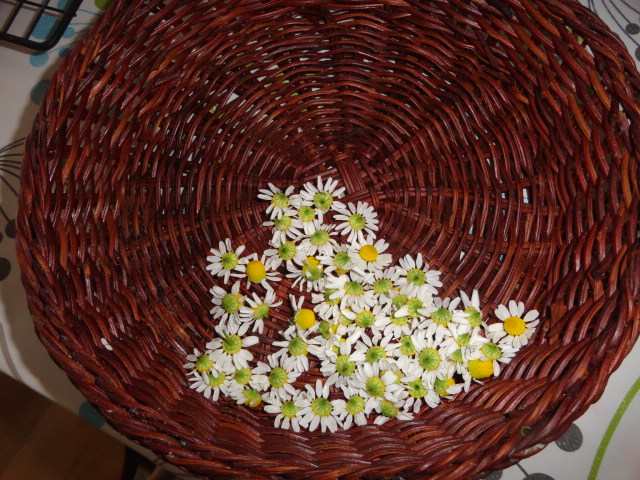
One spare chamomile plant ended up in Madame Cholet (in the interests of greenhouse biodiversity) and is flowering away.  The vast quantity of flowers were picked and dehydrated using my new solar dehydrator (a Sunflair solar oven).  Very exciting!  Also dehydrated have been a batch of jerky and some culinary herbs – the quintessential parsley, sage, rosemary and thyme.  Next to try dehydrating is fruit.  The solar oven cooks too.  So far I’ve only tried it out with a whole chicken.  It was promising but had to be finished off in the kitchen oven after it clouded over.  

Despite the storm, the orchard crop is looking promising.  There will be apples and pears and heaps of stone fruit, particularly plums.  Even the Flatto nectarine is fruiting – I’d written that tree off as a weakling new variety and had vowed not to plant anything other than robust heritage trees, but maybe it’ll prove me wrong.  The cider apples number 4 in total – not a good start to cider making, but at least I can use the Bramley apples instead.  I plan to try my hand at making cider vinegar once there are spare ripe apples.   There are nuts – almonds and sweet chestnuts – but probably not more than a handful in total.  One of the walnut trees that had looked dead has sprung into life.  The new growth may be below the graft, so probably we’ll end up with another quince, assuming that’s the root-stock.


On the animal front, it’s looking possible that both Hera and Athena are pregnant.  They were inseminated and now have each had 2 cycles with very limited signs of heat.  We’ve read that this is what’s supposed to happen, so here’s hoping!  A couple of gorgeous calves in winter would be a great tonic.  The sheep are just the same, and the pigs are porkier.  They’ve been really enjoying the extra fruit that the storm brought down.  They were already getting the falling plums from the overhanging tree in the pig run.  


2017 brings with it new life opportunities for us all.  Lucas's new job is going well, Sam's progress into the army is moving forward, and Billy's getting on with kitchen work and seeking a formal apprenticeship.  Peter has a new job in a brand new bottling company with old colleagues, and I'll be working for the Health Board as an educator for a couple of days a week as well as the Polytechnic work. Hope that won't get in the way of enjoying life and abundance on the land.


Wednesday, 28 December 2016

December 2016


Just about managed to squeeze in December’s blog before the end of December.  My excuse for this tardiness is that I’ve spent much of the month away from home.  I was asked to do 9 days of emergency midwifery cover in Westport at very short notice at the start of the month, and also holidayed in Kaiteriteri with Kaja and kids in the week before Christmas.
Westport was its usual lovely place.  Being on call restricted me to local walks only, but happily there are plenty of those including the gorgeous Carter’s Beach.  Beautiful and full of happy memories.  The stint in Westport came at a crucial time of year in the garden.  Peter was left with a list of instructions, and I took with me the seeds I’d just planted, and a whole bunch that were germinating in a damp tea towel in the kitchen.  I packed some potting compost and suitable containers and off I went.


I finally got round to getting myself another bee suit, so that Peter can help with some of the beekeeping, especially the heavier lifting.  The first batch of this year’s honey is due by the end of the month (to avoid the tutin risks) so I’ll be putting the suit to good use fairly soon.  Full honey boxes can weigh up to 40kg, so a bit of extra muscle won’t go amiss.  We’re nearly out of last year’s honey so the timing couldn’t be better.


On the bee front, one of my best Christmas presents was a beehive mailbox, crafted by Peter.  It’s much bigger than our old one so should be more practical.  Our postie Mike is happy with it too.  


Also on the top ten of Christmas presents was this sh*t jumper from Kaja.  Who manufactures these things??


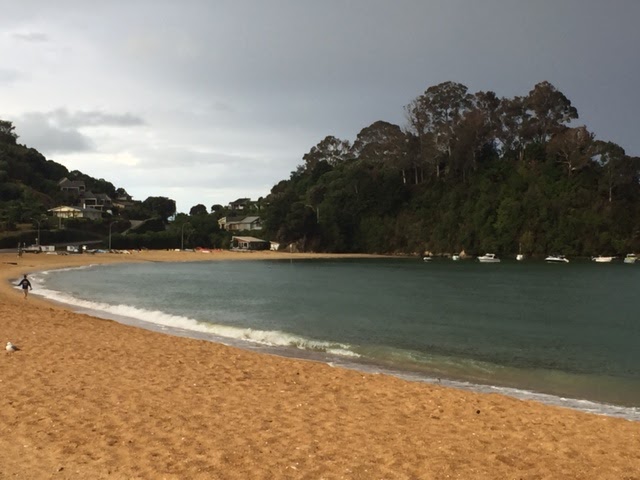
We stayed in an old bach in Kaiteriteri, famous for being the only bach that’s actually on the beach. It's in the distance in the centre of the photo. Kaiteriteri is quite a visitor mecca, and it’s easy to see why.  A breathtakingly beautiful bay, safe swimming in azure sea and golden sands.  We had a day trip to Marahau and took a walk up the Abel Tasman track to the first beach (Porter’s). 


The lifestyle block’s definitely taken a bit of a back seat recently.  Everything seems to be thriving on a bit of neglect, though obviously that includes the weeds.  They’re not such a priority now that the plants are establishing, and will help keep the soil moist over the coming summer months.  The hayman came and cut 91 bales out of the two back paddocks.  Hopefully that’ll be enough to carry through our 5 cattle over winter. 
The animals are all just getting on with their lives.  The cows have been relatively well-behaved for a while, the sheep are just being sheepish, and the pigs are visibly growing.  We’re hoping to move them to the new pig run in the horse arena, but will probably need to put aside a whole weekend for the move.  Karyn has kindly offered to video the process.


It's been lovely to spend time with our grown up sons over the holidays.  Their plans mean that opportunities to be together as a family will become less frequent.  They have their own life plans and it's good to watch them get on with their lives.  The photo shows them with cousins Michael and Melissa in the Onamalutu Reserve.    
Looking forward to 2017 being another great year on the land.